Piers are generally considered when the existing foundation requires additional deep structural support, and the underlying cause cannot be adequately addressed through less invasive measures.
What type of pier is used depends on the structure and the soil.
| Pier Type | Why It Is Used | Typical Application |
|---|---|---|
| Concrete Drilled Pier | Handles heavy loads and can reach deeper competent soil. | New homes and commercial buildings. |
| Helical Pier | Can be installed quickly with limited excavation. | Additions and foundation repairs. |
| Steel Push Pier | Transfers structural loads to deeper supporting soil. | Repairing settling foundations. |
| Precast Concrete Pile | Provides substantial load-bearing capacity. | Residential and commercial construction. |
| Timber Pile | Economical in certain soil and waterfront conditions. | Docks and waterfront structures. |
| Concrete Block Pier | Relatively inexpensive and simple to construct. | Porches, decks, and manufactured homes. |
Engineers determine the composition of the ground and how deep foundation piers need to go through a process called a geotechnical soil investigation. They don't simply guess how deep to dig. They perform tests on the property, collect soil samples, analyze the results, and calculate the depth and capacity needed to support the building.
| Question | How They Determine It |
|---|---|
| What type of soil is it? | Soil classification and laboratory testing. |
| How strong or stiff is it? | Standard Penetration Test (SPT), unconfined compression testing, or other strength tests. |
| How much weight can it support without excessive settlement? | Geotechnical engineering calculations and settlement analysis. |
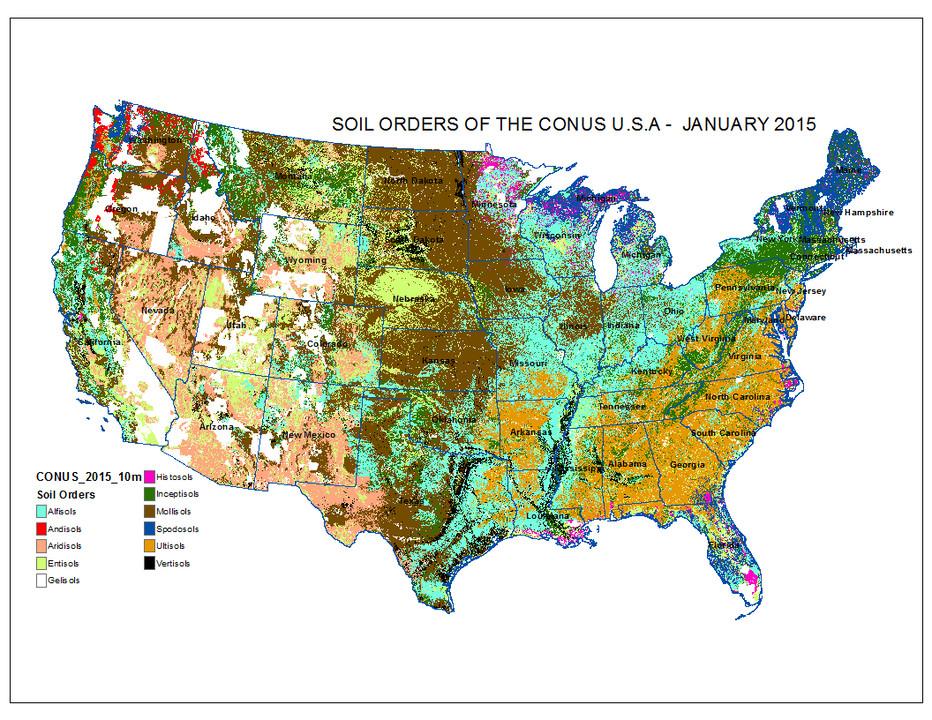
Blow is a look at the type of soils (they call it orders) we have in the United States.
| Soil Order | General Characteristics | Potential Construction Concerns |
|---|---|---|
| Alfisols | Moderately developed, often fertile soils with clay accumulation. | Clay content, drainage, and possible settlement. |
| Andisols | Formed from volcanic ash; often porous and lightweight. | High compressibility and variable strength. |
| Aridisols | Dry-region soils with limited moisture and possible salt or carbonate accumulation. | Salt, cemented layers, and variable bearing conditions. |
| Entisols | Young soils with little profile development. | Highly variable composition and settlement. |
| Gelisols | Soils affected by permafrost. | Frost movement and thaw settlement. |
| Histosols | Organic soils, peat, and accumulated plant material. | Very high compressibility and poor foundation support. |
| Inceptisols | Relatively young, moderately developed soils. | Variable soil strength and drainage. |
| Mollisols | Dark, organic-rich surface soils, commonly grassland soils. | Surface organic material and possible settlement. |
| Oxisols | Highly weathered tropical soils rich in iron and aluminum oxides. | Variable strength, weathering, and excavation conditions. |
| Spodosols | Acidic soils with accumulation of organic matter and iron/aluminum in subsurface layers. | Drainage issues and variable subsurface layers. |
| Ultisols | Highly weathered, acidic soils with clay accumulation. | Clay behavior, erosion, and variable drainage. |
| Vertisols | Clay-rich soils that shrink when dry and swell when wet. | Significant expansion, contraction, and foundation movement. |
Add that to the fact that we try to build houses that make money not last, which means using the cheapest possible material and taking as many short cuts as possible, we end up with millions of houses that are having foundation problems all the time.1